

Unlocking ChondroFiller’s Staying Power: How Natural Adhesion and Joint-Shaping Enable Secure Cartilage Repair
Introduction
Cartilage damage is a common and often frustrating problem that can cause joint pain and limit mobility. For any cartilage repair to be successful, the material used must stay firmly in place while the healing takes place. Traditional repair methods usually involve stitching or mechanical fixation, which can be invasive and sometimes lead to complications.
ChondroFiller presents a groundbreaking alternative by naturally adhering to the cartilage repair site without needing stitches. In this article, we explore how ChondroFiller achieves this secure hold thanks to its unique gel formation and ability to mould itself to the joint’s contours. With insights from the extensive clinical experience of Professor Paul Lee in orthopaedics and rehabilitation, as well as the expert care provided at the London Cartilage Clinic, we’ll explain how this technology supports confident and effective cartilage repair .
The Challenge of Cartilage Repair and the Importance of Secure Placement
Cartilage sits in a demanding environment. It cushions joints and allows smooth movement, but damage can be hard to fix because joints are constantly in motion and under pressure. For cartilage repair materials to work, they need to stay perfectly positioned during the healing phase — any movement or dislodgement can hinder recovery.
Traditionally, surgeons rely on stitching or gluing grafts to hold repair materials in place. While these methods can work, they carry a risk of complications and don’t always guarantee that the repair will be stable long term. Encouragingly, recent research into gel-based and matrix-assisted methods has shown promising results. A retrospective study observed that with ChondroFiller , “there were no complications. No patient indicated any worsening,” reassuring evidence for those seeking safer options.
ChondroFiller ’s approach avoids mechanical fixation by using advanced gel formation and natural adhesion, allowing it to mould closely to the cartilage defect. This close fit creates a solid, stable interface that supports healing even within the demanding environment of moving joints .
Gel Formation: How ChondroFiller Naturally Adheres to the Joint
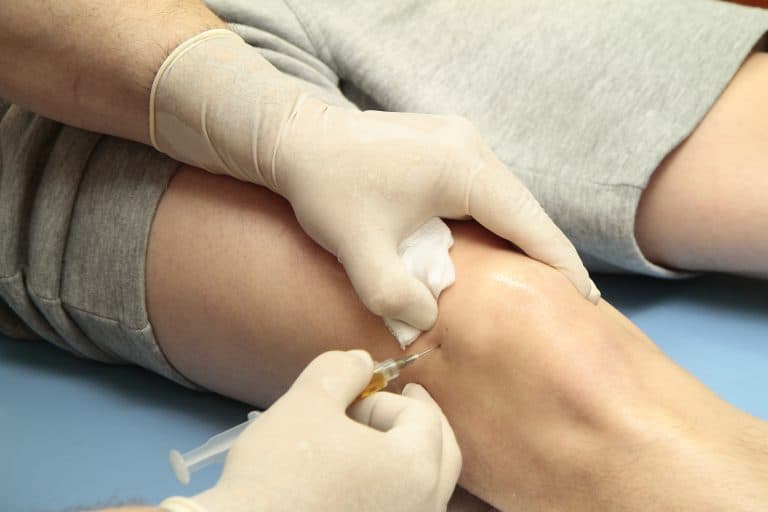
ChondroFiller is delivered as an injectable liquid that quickly transforms into a gel once applied to the damaged cartilage area . This gel naturally adapts to the complex shapes and curves of the joint surface — essentially becoming “joint-shaped” itself.
Imagine a soft putty pressed into a mould, filling every nook and cranny to create a perfect fit. This ability to mould precisely allows ChondroFiller not only to bond securely to the defect site but also to provide a supportive scaffold for new cartilage growth. Because of this natural adhesion, there is no need for stitches or other mechanical fixings. As one study puts it, “the implant shows a perfect integration to the adjacent cartilage right from the beginning and over time, an impressive maturation of the reconstructed cartilage” is seen.
Free non-medical discussion
Not sure what to do next?
Information only · No medical advice or diagnosis.
Stable Under Movement: Staying Put When the Joint Moves
One of the biggest challenges of cartilage repair is maintaining stability when the joint is in motion. Everyday activities like walking or bending can easily dislodge repair materials that aren’t firmly held.
ChondroFiller is specifically designed to resist this. Its gel composition and the way it conforms to the joint’s surface keeps it firmly in place, even under typical movement pressures. Clinical results reinforce this stability — patients report consistent improvements and satisfaction. For example, studies have found that “about 80% of patients indicated good or very good results and would have the operation done again.” At the London Cartilage Clinic, patients receive tailored support during recovery to safely regain movement without risking the repair site.

Who Is ChondroFiller Best For — And What to Expect
ChondroFiller is particularly suited for patients with small to medium-shaped cartilage defects—areas where natural adhesion and gel adaptability can outperform more invasive stitching methods.
The procedure itself is minimally invasive, involving precise injection of the gel onto the damaged cartilage. Following surgery, recovery focuses on controlled movement and physiotherapy to encourage healing while protecting the repair. Many patients report good functional outcomes, supported by studies citing an average improvement score of 75 points on recognised assessment scales.
Professor Paul Lee’s wealth of experience ensures patients fully understand their options and can expect professional, compassionate care throughout their treatment journey at the London Cartilage Clinic .
Conclusion
ChondroFiller offers a fresh and reliable approach to cartilage repair by combining natural adhesion with a joint-shaped gel that moulds perfectly to damaged areas. This innovative method eliminates the need for stitches while ensuring the repair remains stable, even as the joint moves.
For patients considering cartilage repair , consulting with specialists like Professor Paul Lee and receiving treatment at professional centres like the London Cartilage Clinic offers confidence in receiving evidence-based care tailored to individual needs. As always, for personalised medical advice, please consult a qualified healthcare professional.
References
Breil-Wirth, A., von Engelhardt, L., Lobner, S., & Jerosch, J. (2016). Retrospective study of cell-free collagen matrix for cartilage repair.
Frequently Asked Questions
- ChondroFiller naturally adheres to damaged cartilage without the need for stitches, thanks to its advanced gel formation. This reduces the risk of complications sometimes seen with mechanical fixation, offering a less invasive solution for cartilage repair at London Cartilage Clinic.
- ChondroFiller’s gel adapts precisely to the joint’s contours, providing secure adhesion and support. This approach is especially effective for small to medium defects, allowing patients at London Cartilage Clinic to benefit from innovative treatment with minimal invasiveness.
- ChondroFiller is designed to stay firmly in place, even when the joint moves during daily activities. Clinical studies and patient experiences at London Cartilage Clinic show that the gel maintains stability and supports consistent recovery when supervised by experienced specialists like Professor Lee.
- Professor Paul Lee’s extensive experience in orthopaedics ensures patients receive thorough, compassionate care. His expertise allows patients to explore the most suitable cartilage repair options, tailored to individual needs, in the safe and supportive environment of the London Cartilage Clinic.
- Patients at London Cartilage Clinic can expect personalised assessment, expert treatment options like ChondroFiller, and ongoing support throughout recovery. With Professor Lee’s guidance, the focus is on professional, patient-centred care for every step of the healthcare journey.
Legal & Medical Disclaimer
This article is written by an independent contributor and reflects their own views and experience, not necessarily those of London Cartilage Clinic. It is provided for general information and education only and does not constitute medical advice, diagnosis, or treatment.
Always seek personalised advice from a qualified healthcare professional before making decisions about your health. London Cartilage Clinic accepts no responsibility for errors, omissions, third-party content, or any loss, damage, or injury arising from reliance on this material.
If you believe this article contains inaccurate or infringing content, please contact us at [email protected].
London Cartilage Clinic
Modern treatments, designed for lasting knee outcomes
Every treatment plan is selected to help you return to the quality of life you deserve. Our team combines up-to-date techniques with consultant-led decision making across cartilage repair, regeneration and replacement.
What your journey can look like
Step 01
Consultant-Led Assessment
Symptoms, imaging and goals reviewed in one structured appointment.
Step 02
Personalised Treatment Plan
A clear route chosen from repair, regeneration or replacement options.
Step 03
Precision Delivery
Modern techniques and specialist equipment matched to your diagnosis.
Step 04
Long-Term Knee Health
Follow-up guidance focused on durable function and quality of life.
Will the Arthrosamid work for me
PAAG-8+ Questionnaire
A bright, structured entry point for patients exploring Arthrosamid. The questionnaire helps frame suitability, expectations, and 24-month clinical benefit discussion before a fuller consultant-led review.
Designed for shared decision-making. It does not replace specialist consultation, examination, imaging review, or formal medical advice.